Food & Culture
Discover famous foods from France, Italy, Spain, Japan, Mexico, Türkiye and other popular travel destinations, and explore the culture behind each dish
Foods You Must Try in Poland Singapore Hawker Food — Then and Now 10 Famous Dishes to Try in Italy Street Food of Bangkok French Food Beyond Croissants Spanish Tapas and the Culture of Sharing Traditional Japanese Foods Every Traveller Should Know
By Les Ziel
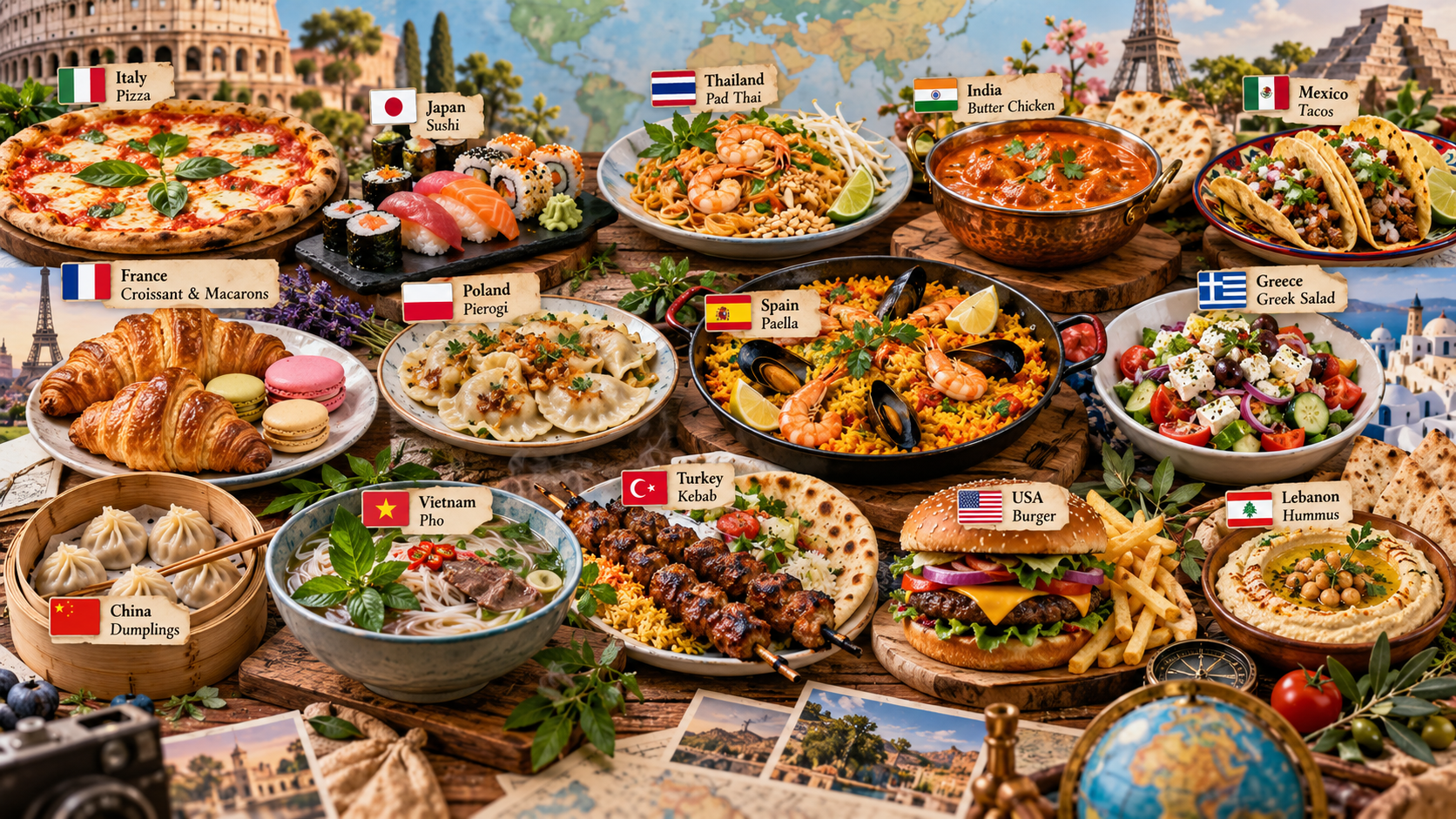
Food & Culture Around the World: Famous Dishes Every Traveller Should Try
Food is one of the best ways to remember a journey.
Years after returning home, you might forget the name of a street or hotel, but you can still remember the taste of a meal you enjoyed in Paris, Rome, Tokyo or Barcelona.
Around the world, food tells the story of a country's history, climate, traditions and people. For travellers, trying local dishes is often as memorable as visiting famous landmarks.
Here are some of the foods and traditional dishes you can discover in many of the world's most popular travel destinations.
France — Cafés, Pastries and Classic French Cooking
France is famous for its architecture, countryside, wine regions and café culture, but food is also a major part of the French travel experience.
Start the morning with a croissant or pain au chocolat from a local bakery, perhaps with a coffee at a pavement café.
Traditional French dishes include boeuf bourguignon, slow-cooked beef traditionally prepared with red wine, and coq au vin, another classic slow-cooked dish.
In southern France, ratatouille celebrates vegetables such as tomato, zucchini and eggplant.
Travellers will also encounter crêpes, French cheeses, baguettes, pastries and, for those feeling adventurous, escargots.
Food in France is rarely only about eating. Sitting at a café and watching the world go by can become one of the memories you bring home.
Spain — Tapas, Paella and Food Made for Sharing
Spanish food and social life are closely connected.
One of the best-known dishes is paella, particularly associated with Valencia. Traditionally prepared with rice, paella now appears in many variations featuring seafood, meat or vegetables.
Another favourite is tortilla española, the Spanish potato omelette made with potatoes, eggs and often onion.
Visit a tapas bar and you might find patatas bravas, jamón ibérico, olives, croquettes, grilled seafood and numerous small dishes designed to be shared.
On a hot day, gazpacho, a chilled tomato-based soup, is a refreshing Spanish classic.
And for something sweet, it is difficult to go past churros, particularly when served with thick hot chocolate.
In Spain, a meal can easily become an evening spent talking, sharing and enjoying several different dishes.
Italy — Pasta, Pizza and Generations of Tradition
Few countries are as closely associated with food as Italy.
Italian cuisine changes considerably as you travel from one region to another.
Naples is famous as the home of pizza napoletana, with its simple combination of dough, tomato, mozzarella and carefully selected ingredients.
Travel through Italy and you can discover countless pasta dishes.
In Rome, favourites include carbonara, traditionally made with pasta, egg, pecorino cheese, black pepper and guanciale.
Other Italian classics include lasagne, risotto, gnocchi, osso buco and parmigiana.
Then there is dessert.
Tiramisu, gelato, panna cotta and cannoli give travellers plenty of reasons to leave room after dinner.
Italian food shows that memorable meals do not necessarily require complicated ingredients. Often it is the quality of a few simple ingredients and generations of tradition that make the difference.
Türkiye — Kebabs, Meze and the Meeting of Cultures
Türkiye sits at a geographical and cultural crossroads, and its food reflects centuries of influences.
Many travellers immediately think of kebabs, but Turkish cuisine goes far beyond one dish.
A traditional meze can include numerous small dishes such as hummus, eggplant, yoghurt-based dips, salads and stuffed vegetables.
Different regions have their own varieties of kebab, while pide, sometimes described as Turkish flatbread or Turkish pizza, is another popular choice.
Manti are small Turkish dumplings commonly served with yoghurt and sauces.
For dessert, baklava layers pastry, nuts and syrup into one of Türkiye's most famous sweets.
And then there is Turkish coffee and tea.
Sitting down for tea or coffee is not simply about drinking something. It is an important part of hospitality and social life.
Japan — Sushi, Ramen and Extraordinary Attention to Detail
Japanese food can be remarkably diverse.
Sushi and sashimi may be the country's most internationally recognised foods, but they represent only one part of Japanese cuisine.
A bowl of ramen can be completely different depending on the city or region you visit.
There is also tempura, lightly battered seafood and vegetables, and yakitori, small pieces of grilled chicken traditionally cooked on skewers.
Okonomiyaki is a savoury pancake especially associated with Osaka and Hiroshima, although the styles differ.
Travellers may also encounter udon, soba, tonkatsu, gyoza and beautifully prepared bento meals.
Japanese dining is often memorable not only because of the taste but because of the attention paid to preparation, presentation and seasonality.
Mexico — Tacos, Mole and Centuries of Flavour
Mexican food is colourful, varied and strongly connected to regional traditions.
The humble taco can take countless forms depending on where you are travelling.
You might try tacos al pastor, grilled meats, seafood tacos or slow-cooked fillings served with fresh coriander, onion, salsa and lime.
Mole is one of Mexico's fascinating traditional sauces, with recipes that can contain a complex combination of chillies, spices and other ingredients.
Other favourites include tamales, enchiladas, pozole, quesadillas and guacamole.
Mexican cuisine demonstrates how food traditions can survive for generations while continuing to evolve.
Exploring a local food market can be just as memorable as visiting a major tourist attraction.
United States — A Country of Regional Food Traditions
There is no single American cuisine.
Travel across the United States and the food changes dramatically.
The hamburger is perhaps America's most internationally recognised food, but regional cooking tells a much bigger story.
In Texas and other parts of the South, barbecue brisket and ribs are taken very seriously.
The Southern states are also known for fried chicken, biscuits and traditional comfort foods.
Visit New York and you may find yourself eating a slice of New York-style pizza.
In Louisiana, dishes such as gumbo and jambalaya reveal French, African, Spanish and Caribbean influences.
New England is associated with clam chowder and lobster, while American diners, food trucks and roadside restaurants form another distinctive part of the travelling experience.
United Kingdom — More Than Fish and Chips
For many visitors, the first famous British dish they encounter is fish and chips.
But British food has much more to offer.
A traditional Sunday roast can include roast meat, potatoes, vegetables, gravy and Yorkshire pudding.
There is also shepherd's pie, bangers and mash, steak and ale pies and the famous full English breakfast.
Afternoon tea introduces another side of British food culture, with tea, sandwiches, cakes and scones traditionally served with jam and cream.
Then there is the British pub.
For travellers, enjoying a meal in an old country pub can sometimes provide a stronger memory of Britain than visiting another tourist attraction.
Germany — Sausages, Schnitzel and Regional Specialities
German food is hearty, regional and closely connected with local traditions.
Visitors will quickly discover that there is no single German sausage.
Different parts of the country have their own varieties of Bratwurst and other sausages.
Schnitzel is widely enjoyed, while dishes such as Sauerbraten, slow-roasted marinated meat, represent traditional German cooking.
You might also encounter Currywurst, particularly in Berlin, as well as pretzels, potato dishes, breads and regional pastries.
Germany's Christmas markets add another dimension to its food culture, with stalls serving traditional sweets, baked goods and warm seasonal specialities.
Food Creates Travel Memories
Great travel memories are not always created at famous landmarks.
Sometimes they happen around a table.
It could be your first real pizza in Naples, sushi in Tokyo, tapas in Barcelona, tacos in Mexico, a croissant in Paris or fish and chips overlooking the sea in Britain.
Take a photograph.
Record the name of the dish.
Remember the restaurant, market or little café where you discovered it.
Years from now, that meal may bring the entire journey back to life.
That is what TravelPassport is about — preserving not only where you travelled, but the experiences that made each journey memorable.
TravelPassport — Keep your travels. Keep your memories. Keep your story alive.